What is Hyprwat?
Hyprwat is a menu tool designed specifically for Hyprland and Wayland compositor. It allows users to create and manage customizable menus that can be accessed directly from the Hyprland environment.
It creates a popup menu at your cursor position where you can select from a list of options. It also has built-in support for WiFi network selection, audio input/output device selection, wallpapers, and custom menus. Custom menus can be defined using simple YAML configuration files.
The name is inspired by some javascript bashing video I saw many years ago. But, also like "What do you need?"... because it's a menu tool.
Right now you can:
- Create a list of key / value pairs that show up in a menu, the selected value is printed to stdout.
- Create an input menu, where the user can type in a value that is printed to stdout.
- Create password menu, where the user can type in a masked value that is printed to stdout.
- Select from available WiFi networks (dbus + NetworkManager).
- Select audio input/output devices (pipewire).
- Select wallpaper (hyprpaper).
- Create custom menus with a bunch of GUI controls using YAML configuration files.
What does it look like?
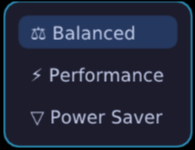
Integrate with powerprofilesctl to switch power profiles:
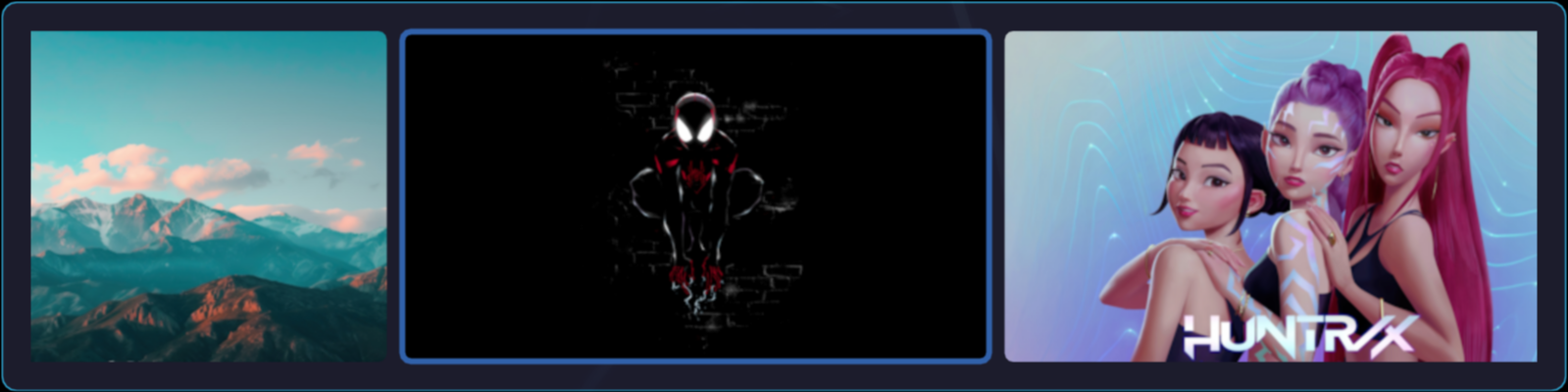
Change wallpapers and lockscreen:
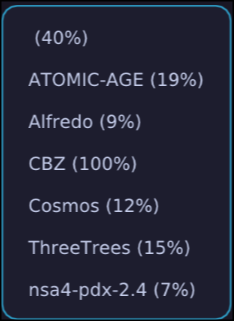
Connect to wifi networks:
Why?
I created hyprwat to fill a gap in the Wayland ecosystem for a simple, flexible, and visually appealing menu system that can be easily integrated into various use cases. Particularly, for waybar I needed a menu selection for wifi networks, power profiles, pavcontrol, etc.
Then, I wanted an easier way to switch wallpapers and lockscreen and found the existing solutions too hard, so I just added it into hyprwat. I'll keep doing this, it's fun.
My first attempt used SDL2/3 and ImGui, but I didn't like the menu being a window (there's no layer shell support in SDL). So I rewrote it using pure Wayland protocols and EGL for rendering.
If nothing else it's a pretty cool cpp wrapper for Wayland protocols.